

 See My Latest Article on HelloNation

Sports injuries range from mild muscle strains to significant ligament, joint, bone, or head injuries. Chiropractic care may help with some activity-related musculoskeletal problems, particularly when treatment includes movement assessment, manual therapy, and a gradual exercise plan. It is not a substitute for emergency care, imaging, surgery, or concussion management when those services are needed.
What types of sports injuries may benefit from chiropractic care?
Chiropractic care is most relevant to injuries involving muscles, joints, ligaments, tendons, and the spine. Examples may include:
- Low-back pain after lifting, running, cycling, or repetitive rotation
- Neck and upper-back discomfort related to contact sports or poor training mechanics
- Joint stiffness after an ankle, knee, shoulder, or hip injury
- Mild sprains and strains after the acute injury has been assessed
- Overuse problems involving tendons and surrounding muscles
- Movement restrictions that continue after swelling and sharp pain improve
The goal is usually not to “put something back into place.” Instead, care may focus on identifying painful movements, restoring comfortable mobility, improving coordination, and helping the athlete return to normal activity gradually.
A sports injury can also involve more than one problem. For example, an ankle sprain may change the way a person walks, placing extra stress on the knee, hip, or lower back. Examining the entire movement pattern can help identify these related issues.
How can chiropractic treatment support recovery?
Chiropractic care may support recovery through several approaches, depending on the injury and the person’s symptoms.
Movement assessment: A clinician may observe walking, squatting, reaching, balance, or sport-specific motions. This can reveal weakness, limited range of motion, or compensations that are not obvious while resting.
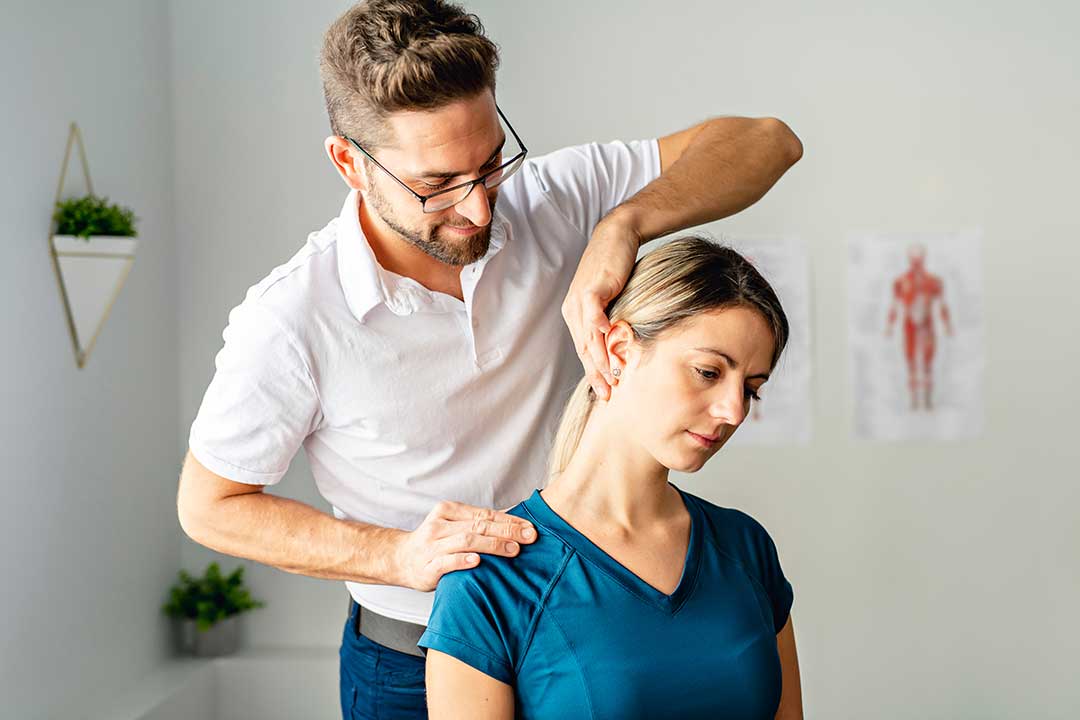
Manual therapy: Hands-on techniques may temporarily reduce stiffness, improve joint movement, or make certain exercises more comfortable. Spinal manipulation is only one possible technique and is not appropriate for every injury.
Exercise guidance: Recovery usually depends more on progressive rehabilitation than on passive treatment alone. Exercises may address strength, balance, flexibility, coordination, or endurance.
Load management: Athletes often worsen an injury by returning to the same training volume too quickly. A practical plan may involve modifying practice, reducing impact, or using alternative activities while tissues heal.
Education: Understanding which symptoms are expected, which movements are safe, and how to progress activity can reduce fear and prevent repeated aggravation.
Evidence is stronger for exercise-based rehabilitation and general musculoskeletal care than for claims that spinal adjustments directly improve athletic performance. Chiropractic treatment should be viewed as one possible part of a broader recovery plan rather than a guaranteed performance enhancer.
Can chiropractic care help with back or neck injuries from sports?
It may help some people with uncomplicated, movement-related back or neck pain, especially when symptoms are connected to stiffness, muscle irritation, or altered mechanics. Treatment should be based on an examination rather than the assumption that every painful area needs to be adjusted.
Neck injuries require particular caution. Severe neck pain after contact, a fall, or a collision may indicate a more serious injury. Numbness, weakness, problems with balance, unusual headaches, or pain traveling into an arm should be evaluated promptly.
A person with a possible concussion should not rely on spinal treatment to manage the injury. Symptoms such as confusion, loss of consciousness, repeated vomiting, worsening headache, unusual behavior, slurred speech, or increasing drowsiness require urgent medical evaluation. Return to play after a concussion should follow an appropriate, step-by-step medical process.
What should athletes expect during an evaluation?
A useful evaluation begins with questions about how the injury occurred, when symptoms started, what activities make them worse, and whether there has been swelling, bruising, instability, numbness, or weakness.
The examination may include:
- Range-of-motion testing
- Strength and reflex checks
- Balance and coordination testing
- Joint stability assessment
- Walking, lifting, or sport-specific movement observation
- Screening for symptoms that require imaging or referral
Treatment should be adjusted to the stage of healing. A swollen ankle immediately after an injury may need protection, relative rest, compression, elevation, and medical assessment before hands-on care is considered. Later, mobility and strengthening may become more useful.
If the injury involves a suspected fracture, major ligament tear, dislocation, infection, or significant nerve problem, referral for medical testing is more appropriate than routine manipulation.
When should someone seek urgent medical care?
Some sports injuries should not be managed through routine chiropractic treatment alone. Seek prompt medical care for:
- A visible deformity or joint that appears out of position
- Inability to bear weight after a fall, twist, or collision
- Severe swelling, rapidly increasing bruising, or uncontrolled pain
- Numbness, weakness, loss of coordination, or changes in bladder or bowel control
- Chest pain, shortness of breath, fainting, or unusual heart symptoms
- Suspected concussion or head injury
- Severe pain after high-impact trauma
- Fever, redness, warmth, or other signs of possible infection
In the heat of an Arizona summer, exercise-related illness is another concern. Dizziness, faintness, confusion, unusual weakness, severe headache, or loss of coordination are not ordinary signs of being “out of shape.” Stop activity, move to a cool place, and seek immediate medical help when heat illness is suspected. Early-morning or evening training, gradual acclimatization, regular hydration, and monitoring teammates can reduce risk.
How can athletes reduce the chance of reinjury?
Returning to sport should be based on function, not simply on the number of days since the injury. Before resuming full activity, an athlete should generally be able to perform sport-related movements with controlled technique and without a meaningful increase in pain or swelling.
Helpful prevention habits include:
- Warming up with dynamic movement before intense activity
- Building training volume gradually after a break
- Strengthening areas that support the injured joint
- Practicing balance and landing mechanics
- Wearing appropriate protective equipment
- Allowing adequate sleep and recovery time
- Stopping or modifying activity when pain changes movement quality
A useful return-to-play progression may begin with walking or light drills, followed by moderate training, then higher-speed or contact activities. Symptoms should be monitored during the activity and again later that day and the next morning.
For residents in San Tan Valley, outdoor training conditions deserve extra attention because prolonged heat exposure can contribute to dehydration, cramping, fatigue, and poor coordination. A well-designed recovery plan considers the environment as well as the injury itself.
What is the main takeaway?
Chiropractic care may help selected sports injuries by improving mobility, addressing movement compensations, guiding rehabilitation, and supporting a gradual return to activity. Its role is usually greatest for uncomplicated musculoskeletal problems, not emergencies or conditions requiring surgery.
The safest approach combines an accurate evaluation, appropriate medical referral when needed, progressive exercise, sensible activity modification, and attention to heat and concussion safety. Manipulation should be considered only when it fits the diagnosis and the person’s overall recovery plan.